
We’re Still Here
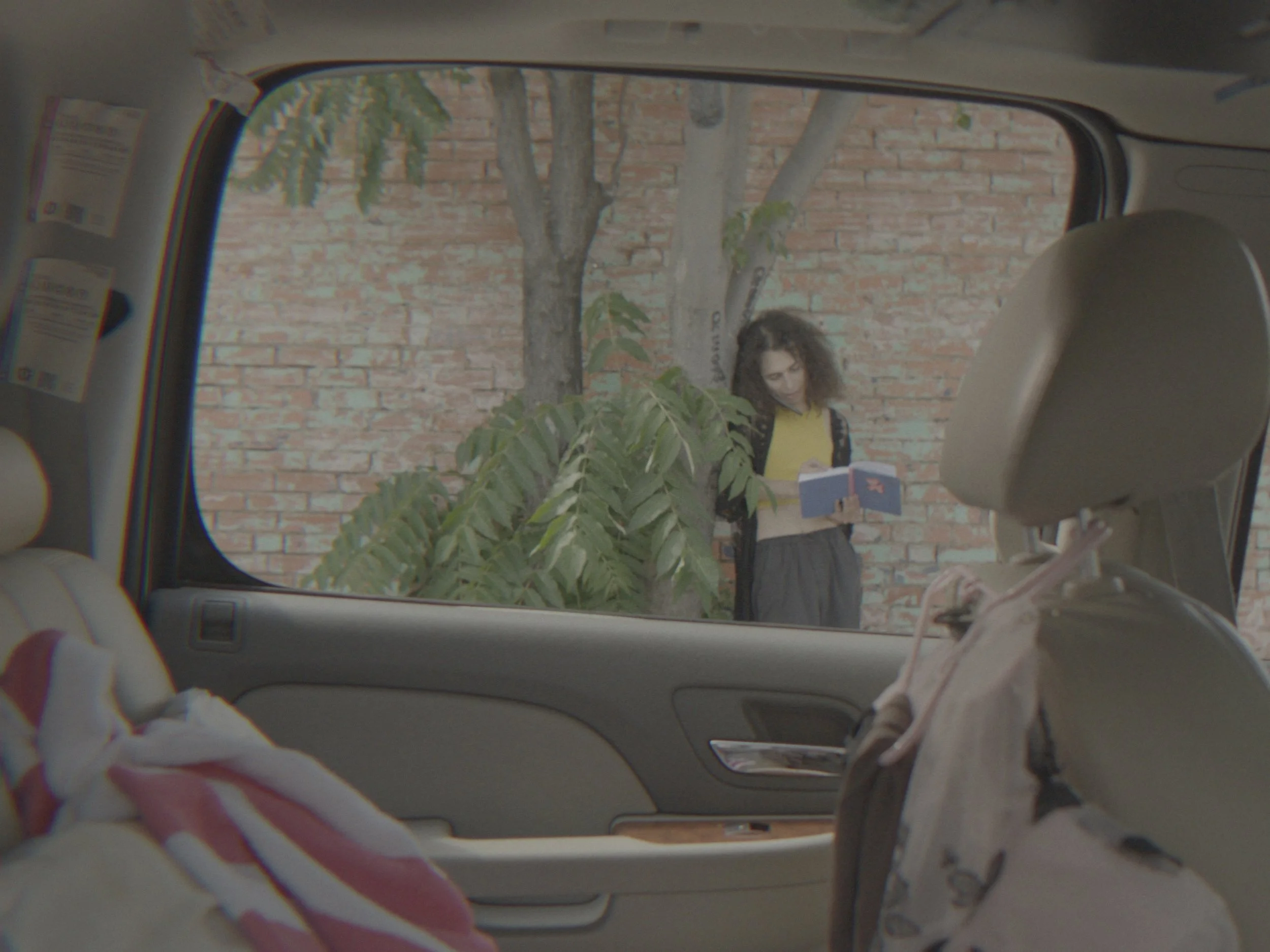
An Essay By Robin Dylan Garcia
Tell me if you’ve heard this story before: A queer man/woman/Gender-Nonconforming person is at a crossroads: Either they stay in their hometown and forever suppress their sexual desires/gender identity, or move up north, where they can be free and explore themselves (most of the time it’s New York City, though anywhere up north works as well). This trope has been repeated many times over, in Novels, TV shows, Movies, and any more mediums. But what happens when we remove the crossroads entirely? What if the opportunity to leave was never an option to begin with? How would we cope with something like that?
My isolation has defined my queerness. I stumbled upon queer communities online in high school, though I was never really out and proud about it, especially in a Texas School, and while we did have gay/queer people at the school, I never really made any real connections with them. It wasn’t until I moved to New York City for college that I really started to connect with the community, but it was quickly upended with the COVID-19 Pandemic, which was then hit with a sudden medical situation that left me feeling distant once more. Once I graduated, I had to move back home to Dallas, where I became a semi-hermit, only making contact online or at the bar I work at, and never really stepping out of my comfort zone. Even my trans awakening happened online, while talking with my therapist about my struggle to connect to other, more femme presenting transgender females. It was a dark time for me.
And so, reflecting on the queer/trans media that I’ve consumed, none have really connected to me or stood out in any way. The only one that really attached to me was “Je Tu Il Elle” by Chantal Akerman, where she directs, writes, and acts as a lonely woman who secludes herself in
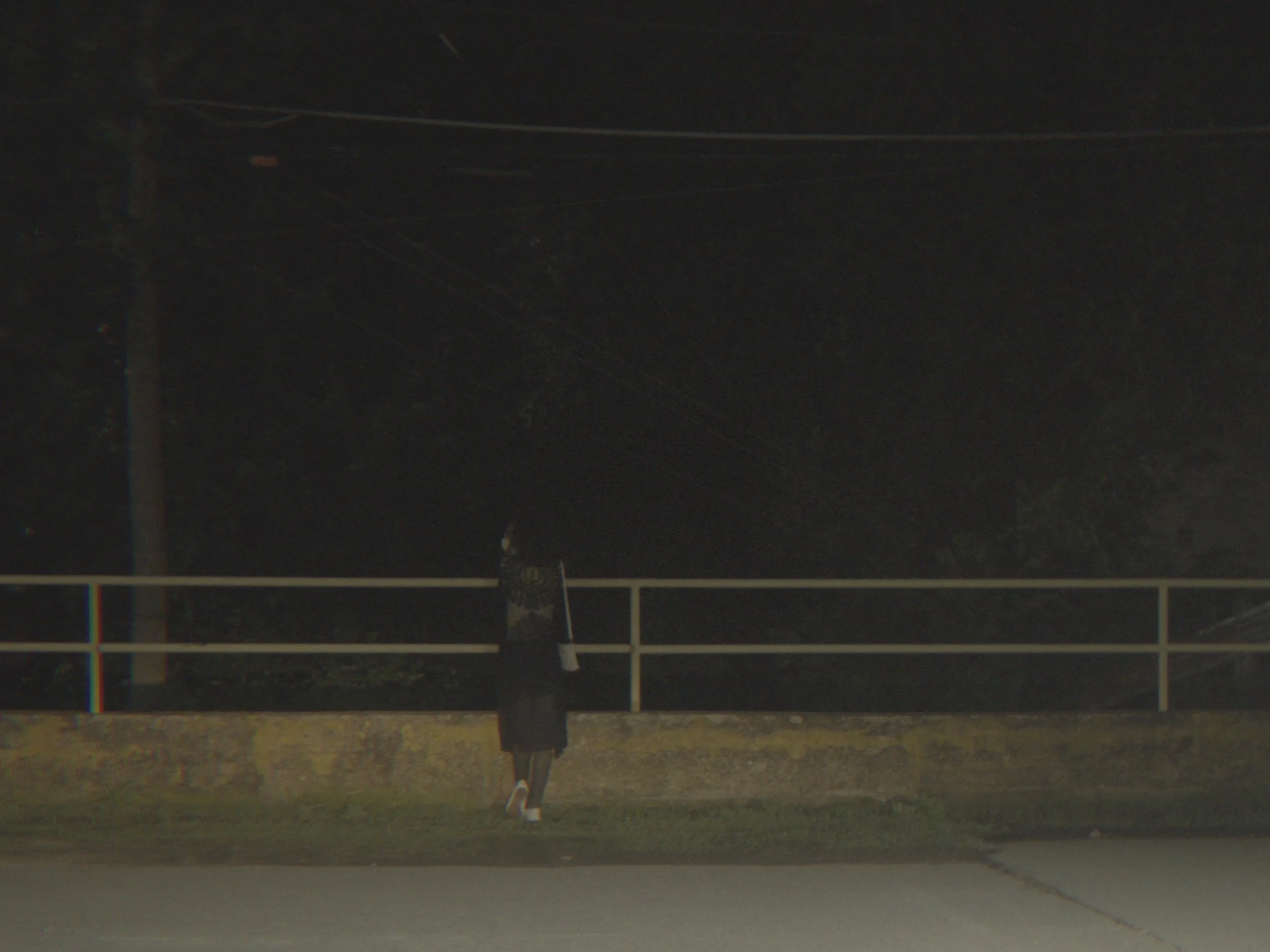
her room. I always applauded Chantal for not putting her characters on a pedestal, and this film is no different. The main character is flawed, she has made mistakes. She isn’t the pinnacle of femininity, or queerness, she’s eating out of a bag of sugar while trying to get over a breakup. That’s what I originally set out to do in “ANDRENA”. I wanted to match that same feeling of isolation that I had felt in my early days, that fear of the outside world, a world that vilifies every aspect of yourself, while also making the main character feel real and flawed. I’m a visual person, and love working with images (I wouldn’t be a filmmaker if I didn’t), and so I set out to challenge myself. Having been inspired by the aforementioned Chantal Akerman, as well as Tsia-Ming Liang, Apichatpong Weerasethakul, Lav Diaz, and many other films and filmmakers that would be put in the “Slow Cinema” camp, I wanted to test the audience by setting the camera in a singular position for each scene; no Over The Shoulders, no fade-ins or outs. I wanted the camera to feel invisible to the actors, let them naturally exist in the scenes they play in, not worry about if they're in shot or not, and let the sound carry the film. My ultimate goal was to make the audience self-aware of their own participation in the film, make themselves active participants in the story. However, as the shoot days went by, I was worried that I had made a mistake, not with a single shot or a camera movement, but with how I went about the whole film. I was worried that I had just made a film that is more focused on the violence enacted on the main character, and the abuse she faces on screen, rather than focusing on the feeling of isolation, or, to put it more bluntly, “Torture Porn”. Even though I don’t explicitly show any sexual violence in the film (both for mental health and stylistic reasons), not even as much as two lips touching each other, I didn’t want the violence to overtake the themes of the film. That was the last thing I wanted to create, especially with a Trans-Latina Sex Worker
as the protagonist. What was missing was the “Golden Thread”, as a previous professor put it. What was truly anchoring me towards this story?
While writing the essay that you, dear viewer, are reading right now, I took a break and scrolled through Bluesky when the topic of queer representation came up in a thread between two mutuals of mine. I came in, talking about the lack of Trans-Latinas in media, when something hit me: Where is the Trans representation in the southern US? There are very few Trans films out there, and rarely any about the experience of living in the South. Living as a Femme-Latina is already hard enough in America, but living as a Trans-Latina sex worker in the South is not the same as it is up North. The story of “ANDRENA” could not have worked if this was set in New York City, or Seattle, it could only be told in my home state of Texas, where I lived.
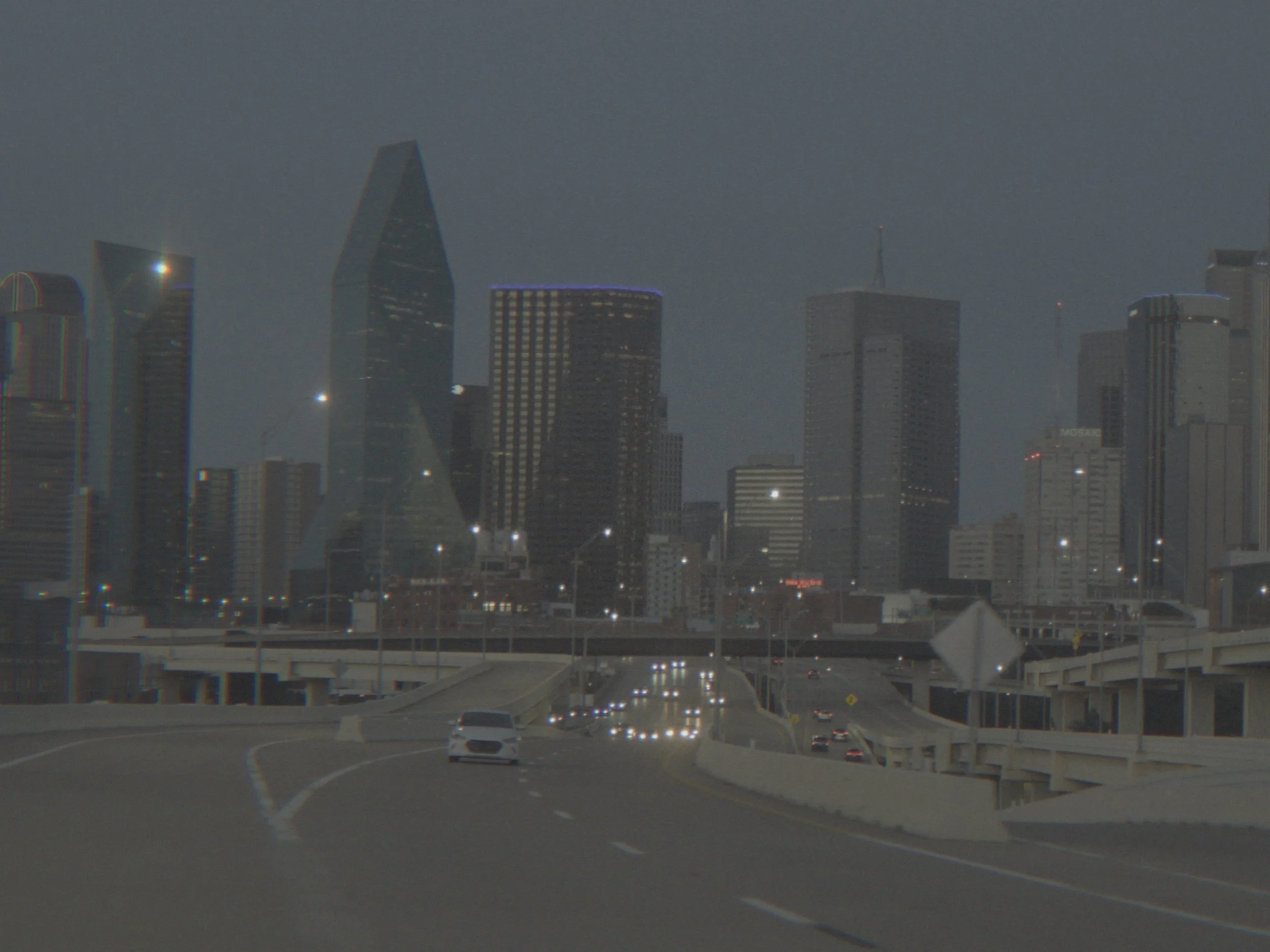
The idea that the north is this “refuge” for all Trans people, and that it’s our only security from the bigoted people from the South, is dangerous. Yes, the laws here are strict, and ICE is a constant threat, but some of us queer people, such as myself and many other people I know, both on-set and off, don’t have a choice, either because we can’t move, we have job security, we have family to take care of, or whatever other reason there is. We have no choice. There are many a queer people in Texas, Louisiana, Alabama, or Florida, who wake up every day, and must endure the transphobia, the racism, and the rising fascism, and still find the energy to fight for basic human rights. This is not to judge those who have moved out of the South or were born and raised in the North, and I applaud those who do move and find greener pastures, but the South is not a lost cause as many in the media, from both sides of the aisle, claim it to be. We’re still here, despite the isolation, and I hope that this film exemplifies that.